top of page
real ale craft beer

Beer Jargon Explained: What DDH, IBU, NEIPA And Other Beer Terms Actually Mean

  • Jun 8
  • 2 min read
A selection of craft beers displayed on a wooden pub table, including a West Coast IPA, hazy NEIPA, DIPA, pilsner and raspberry cheesecake pastry sour. Matching cans and glasses are arranged in a row, with a notebook listing common beer terms such as ABV, IBU, DDH and Cryo Hops. Warm pub lighting and a blurred bar background create an inviting craft beer tasting atmosphere.

Ever stood in a bottle shop staring at a can covered in terms like DDH, NEIPA, Cryo Hops and IBU, wondering if you've accidentally picked up a chemistry textbook?


You're not alone.


Craft beer has developed its own language over the years, and some breweries seem determined to fit as many confusing abbreviations onto a can as physically possible.


Here's a straightforward 'Beer Jargon Explained' guide to the beer terms you're most likely to encounter.


ABV


A lineup of beers with different alcohol strengths displayed on a wooden pub table, ranging from a dark stout and pale lager to a hazy IPA and stronger double IPA. A chalkboard explains that ABV stands for Alcohol By Volume, showing how beer styles can vary significantly in alcohol content.

Alcohol By Volume


The percentage of alcohol in a beer.


Examples:

  • Guinness: 4.2%

  • Punk IPA: 5.4%

  • DIPA: often 8%+

  • Imperial Stouts: can exceed 12%


IBU


A row of beers displayed in a pub setting with increasing International Bitterness Unit (IBU) levels, ranging from low bitterness to highly bitter styles. Fresh hop cones, a bitterness guide and a chalkboard explaining IBU illustrate how hop bitterness can vary between different beers.

International Bitterness Units


Measures bitterness.


In theory.


The problem is that perceived bitterness and measured bitterness aren't always the same thing. That can have a lot to do with various factors, especially the type of malt used.


A hazy NEIPA with a high IBU can taste smoother than a lower IBU West Coast IPA.


IPA


An India Pale Ale displayed on a wooden bar,with a golden amber body. Fresh hops and craft beer cans highlight the hop-forward character that has made IPA one of the most popular beer styles in the world.

India Pale Ale


Originally a stronger, hoppier beer brewed for export.


Today it has evolved into dozens of sub-styles.


NEIPA


A hazy New England IPA (NEIPA) poured into modern craft beer glasses beside a colourful beer can on a wooden pub table. Fresh hop pellets and hop cones surround the display, while a chalkboard highlights the juicy, fruity and low-bitterness characteristics that distinguish NEIPAs from traditional IPAs.

New England IPA


Usually:


  • Hazy

  • Juicy

  • Soft

  • Low bitterness


Common flavours:


  • Mango

  • Pineapple

  • Peach

  • Orange


Basically your happy place.


West Coast IPA


A clear golden West Coast IPA served in pint glasses alongside a craft beer can on a wooden pub table. Fresh hop cones and hop pellets surround the display, while the beer's bright appearance reflects the piney, citrus-forward and more bitter characteristics typically associated with the West Coast IPA style.

Usually:


  • Clear

  • Piney

  • Resinous

  • Bitter


This is where I normally start looking for something else to drink.


DDH


A Double Dry Hopped (DDH) IPA displayed on a wooden pub table alongside fresh hop cones, hop pellets and hazy beer glasses. The beer's cloudy appearance and hop-filled presentation illustrate how extra dry hopping can increase aroma, flavour and hop character without necessarily adding more bitterness.

Double Dry Hopped


Extra hops are added after fermentation.


Usually creates:


  • Bigger aroma

  • More flavour

  • More juicy character


It doesn't automatically mean better.


DIPA


A Double IPA (DIPA) poured into a modern craft beer glass beside a matching can on a wooden pub table. The deep golden beer and hop-forward presentation highlight the stronger alcohol content, fuller body and intensified hop character that distinguish Double IPAs from standard IPAs.

Double IPA


Stronger IPA.


Usually:


  • More alcohol

  • More hops

  • Bigger body


Sometimes fantastic.


Sometimes a liquid assault on your liver.


Triple IPA


A Triple IPA displayed in a craft beer glass alongside a matching can on a wooden pub table. The rich golden beer, abundant hops and bold presentation emphasise the high alcohol content, intense hop aroma and powerful flavour profile that make Triple IPAs one of the strongest and most extreme IPA styles available.

Take a DIPA.


Ignore all sensible limits.


Proceed accordingly.


Dry Hopped


A dry hopped IPA served in a pint glass beside a craft beer can, surrounded by fresh hop cones and hop pellets on a wooden pub table. The display illustrates the dry hopping process, where hops are added after fermentation to boost aroma and flavour, creating a beer with pronounced hop character and fruity aromas without significantly increasing bitterness.

Hops added after the boil.


Creates aroma without adding much bitterness.


Cryo Hops


A Cryo Hops IPA displayed in a pint glass beside a craft beer can, surrounded by hop cones, hop pellets and concentrated hop products on a wooden pub table. The image illustrates how Cryo Hops use concentrated lupulin from the hop cone to deliver intense aroma and flavour while reducing excess plant material in the brewing process.

A concentrated hop product containing lupulin-rich material.


Translation:


More hop punch with less plant matter.


Session Beer


A session beer served in a pint glass beside a craft beer can on a wooden pub table, surrounded by fresh hop cones and hop pellets. The display highlights the lower alcohol content and easy-drinking nature of session beers, which are designed to deliver flavour while remaining more approachable for longer drinking sessions.

Designed to be lower in alcohol while remaining flavourful.


Usually:


  • Under 5%

  • Easy drinking

  • Suitable for longer sessions


Hence the name.


Imperial


An Imperial IPA displayed in a pint glass alongside a matching craft beer can on a wooden pub table. Fresh hop cones and hop pellets surround the beer, illustrating the stronger alcohol content, fuller body and intensified hop character that define Imperial beer styles compared with their standard-strength counterparts.

Usually means:


  • Bigger

  • Stronger

  • More intense


Imperial Stout. Imperial IPA .Imperial Porter.


Essentially the brewery looked at a normal beer and thought, "Let's make this ridiculous."


Pastry Sour


A colourful pastry sour beer served in a stemmed glass beside a craft beer can on a wooden pub table. The scene includes fresh berries, cheesecake, pastries and dessert ingredients, illustrating how pastry sours are brewed to mimic sweet treats with bold fruit flavours, tart acidity and rich dessert-inspired character.

A sour beer inspired by desserts.


Examples include flavours such as:


  • Cheesecake

  • Doughnuts

  • Birthday cake

  • Ice cream


Some people love them.


Some people think they're an insult to brewing.


Untappd


A smartphone displaying a beer rating and discovery app beside a pint of craft beer on a pub table. The scene represents social beer tracking, allowing users to log beers, rate them, discover new breweries and share recommendations with other beer enthusiasts.

A beer-rating app where drinkers score beers.


Useful for discovering beers.


Less useful when someone gives a beer one star because the delivery driver was late.


Final Thoughts


Beer doesn't need to be complicated.
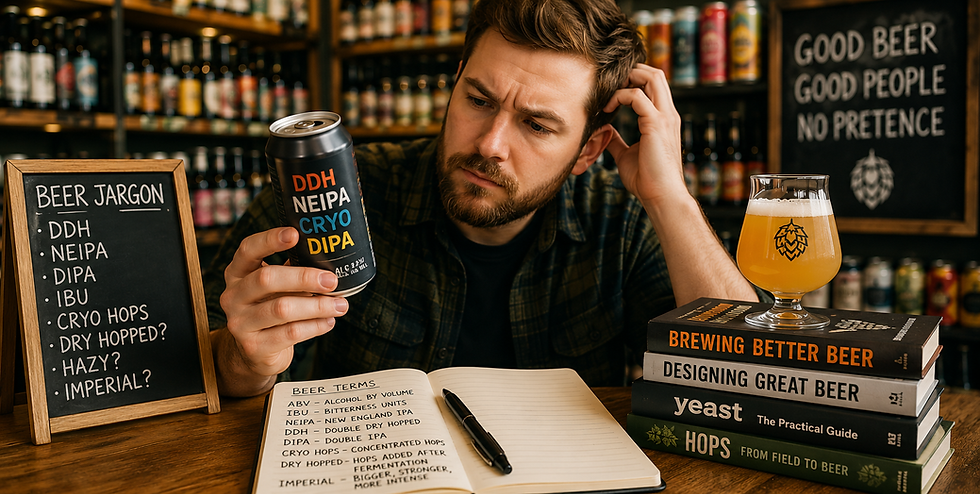

A craft beer enthusiast studies a modern craft beer can covered in brewing terms such as DDH, NEIPA, Cryo Hops and DIPA while sitting in a bottle shop. A notebook, beer reference books and a hazy IPA sit on the table, with shelves of craft beer blurred in the background, illustrating the challenge of understanding beer jargon.

Once you understand a handful of common terms, reading a craft beer can becomes a lot easier.


And if you ever see a can claiming to be a DDH Cryo-Hopped Triple NEIPA brewed with six experimental hop varieties and a yeast strain discovered on a mountain goat, you'll at least know roughly what you're getting yourself into.


If you enjoyed this Beer Jargon Explained guide, comment and let me know - and feel free to ask for more craft beer guides too!


Hopper out!


Final message - why not check out my new "Beer Explained in 60 Seconds" playlist, where a new 1-minute video is posted ever weekday at 1200...


Comments

Rated 0 out of 5 stars.
No ratings yet

Add a rating
bottom of page